
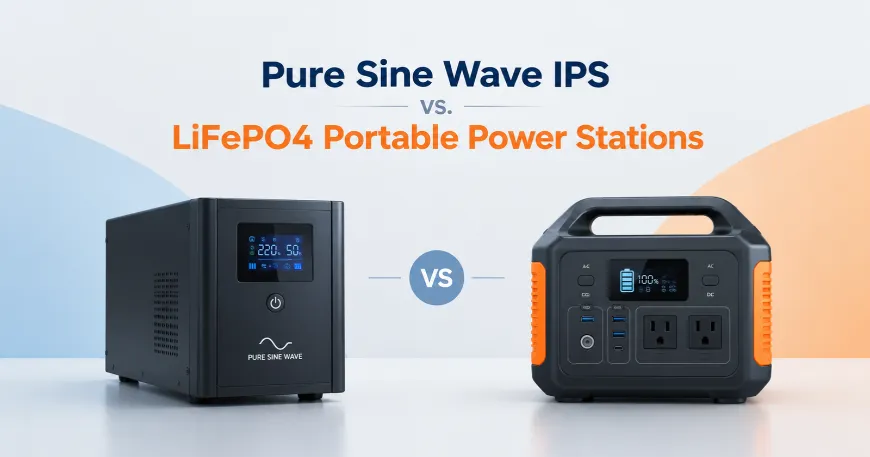
Should you buy a pure sine wave IPS or the latest portable power stations with LiFePO4 batteries? The right choice totally depends on your budget, backup time, power needs, and installation space. Yes, both options can keep your home or office running during outages. Yet, their battery life, portability, charging options, and ability to run each appliance differ.
Whether you need backup power for daily use or off-the-grid activities, this blog is about to explain the difference between pure sine wave IPS machines and LiFePO4 portable power stations and compare them step-by-step accordingly.
Table of Contents
- How Pure Sine Wave IPS Machines Work
- How LiFePO4 Portable Power Stations Work
- Advantages of Pure Sine Wave IPS Over LiFePO4 Portable Power Stations
- Advantages of LiFePO4 Portable Power Stations Over Pure Sine Wave IPS
- Best Power Backup Device For Your Needs For Different Standards
- Which One is the Best Choice Now
If you have already read our dedicated blog on Portable Power Station vs IPS vs Generator, this comparison will help you make a more informed buying decision.
How Pure Sine Wave IPS Machines Work
Let's start with first, how a pure sine wave IPS delivers electricity to your appliances. It converts the battery's DC power into AC power with a smooth, consistent waveform that closely matches the electricity supplied by the grid.
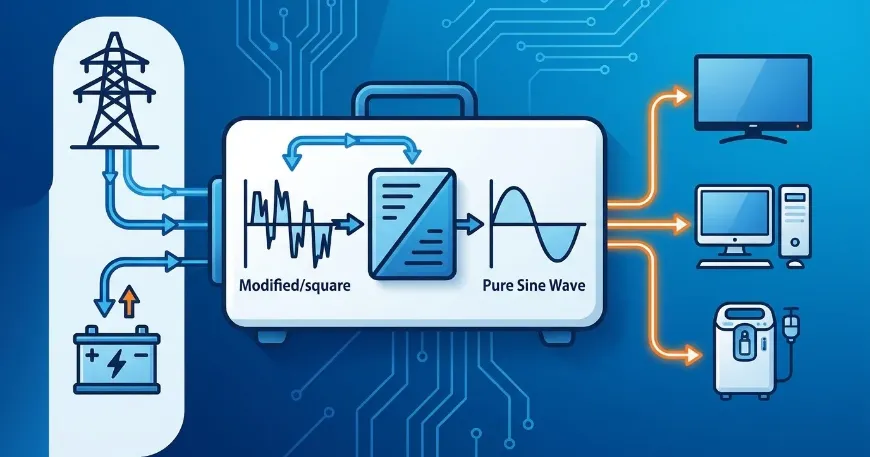
This stable output helps users’ sensitive electronics, computers, refrigerators, and other home appliances run properly during load-shedding. When comparing pure sine wave IPS vs LiFePO4 power stations, the output waveform is an important factor. However, battery capacity, backup time, and charging options also affect your buying decision.
How LiFePO4 Portable Power Stations Work
A LiFePO4 portable power station stores electricity in a lithium iron phosphate battery and supplies power through built-in output ports. You can recharge it from a wall socket, solar panels, or a compatible power source.
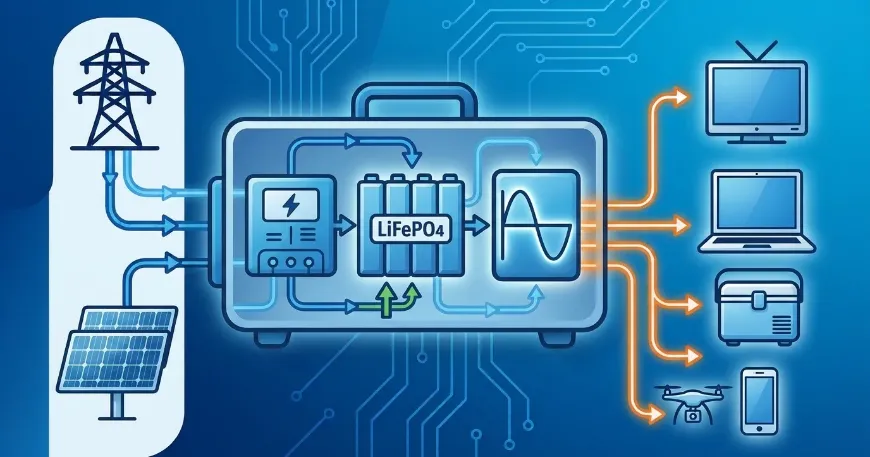
It's built-in inverter converts stored DC power into AC power for compatible appliances, while USB ports support phones and other devices. Understanding the difference between pure sine wave and lithium iron phosphate portable power stations helps you compare battery life, charging options, portability, and backup capacity before buying.
Advantages of Pure Sine Wave IPS Over LiFePO4 Portable Power Stations
A pure sine wave IPS can be a suitable choice for users who need regular backup power at home or in the office. It can support computers, refrigerators, fans, and other compatible appliances during load-shedding. Users who need longer backup periods can choose a pure sine wave IPS machine with suitable battery capacity. These may also suit households that prefer a fixed backup setup.
For small businesses, students, and remote workers, an IPS can help keep essential devices running during power cuts. However, if you still prefer to go with portable power stations, follow our guide on the best portable power station choices you can make in late 2026.
Advantages of LiFePO4 Portable Power Stations Over Pure Sine Wave IPS
While a pure sine wave IPS suits users who need regular backup power at home or in the office, a LiFePO4 portable power station offers more flexibility for different needs. Its compact design, built-in battery, and multiple output ports make it useful for students, remote workers, travelers, and small business owners. Many models also support solar charging, which helps users conveniently access power in outdoor locations.
These power stations' long-lasting LiFePO4 batteries also support frequent charging cycles. If you plan to buy one, check our power station buying guide to compare battery capacity, output power, charging options, and device compatibility.
Best Power Backup Device For Your Needs For Different Standards
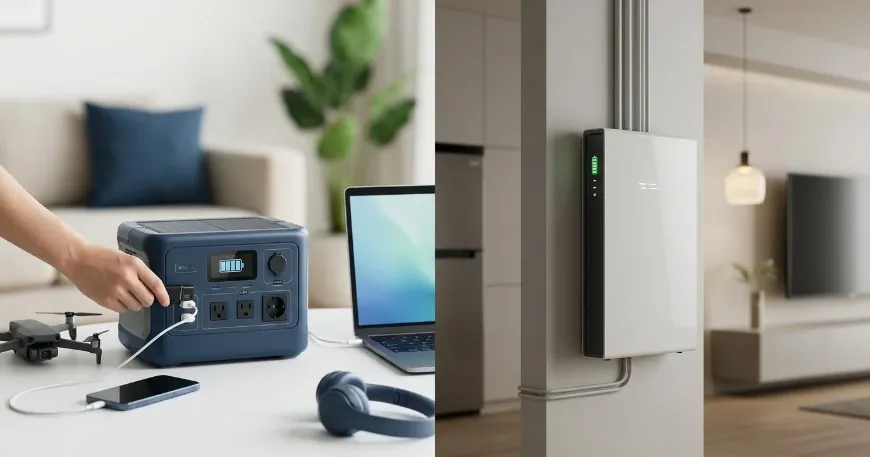
A pure sine wave IPS often suits households that need fixed backup power for several appliances. A LiFePO4 portable power station works well for users who value portability, faster setup, and flexible charging options. The following comparison covers nine key standards to help you choose the right option for your home, office, or outdoor use.
Battery Life & Charging Cycle
LiFePO4 portable power stations usually last longer because their batteries support thousands of charge cycles. A traditional pure sine wave IPS with a lead-acid battery often needs replacement sooner. For frequent daily use, LiFePO4 offers a longer service life, although actual performance depends on battery quality, temperature, and charging habits.
Maintenance & Lower Long-Term Running Cost
A LiFePO4 portable power station requires little routine maintenance because its battery is sealed and its battery management system monitors key safety conditions. Traditional lead-acid IPS batteries may need water refills and terminal cleaning. If you want fewer maintenance tasks and lower battery replacement costs, a portable power station can be a better long-term choice.
Upfront Cost
A traditional pure sine wave IPS often costs less at the time of purchase, especially when you already own a compatible battery. Portable power stations include a battery, inverter, and charging system, so their initial price can be higher. The LiFePO4 power system cost compared to a sine wave IPS setup depends on capacity, installation, battery type, and included features.
Appliance Safety
Both options can safely power compatible appliances when their output ratings and protection features meet the requirements. A pure sine wave output supports devices with motors and sensitive electronics, such as a television, ceiling fan, refrigerator, air conditioner, and LED light. However, you must check the starting power and continuous load before connecting appliances, especially those with compressors or heating elements.
Backup Time
Backup time actually depends on battery capacity, inverter efficiency, and the total power draw of connected appliances. A high-capacity pure sine wave IPS can support several household appliances during extended load-shedding. A portable power station can also provide long backup when its battery capacity matches the load.
Charging Speed
Portable power stations often charge faster than traditional lead-acid IPS systems. Many models support AC fast charging and solar input through a built-in controller. An IPS with a lead-acid battery may need several hours to recharge fully. If you plan to use a solar panel as the source power, check the supported input power and charging time for the exact model.
Portability
A portable power station is the clear choice for users who need to move their backup power between rooms, offices, vehicles, or outdoor locations. Because its battery and inverter sit inside one case, many models even have built-in handles. On the other hand, a traditional pure sine wave IPS usually needs a fixed installation and a separate battery, which makes relocation harder.
Low Noise Operation
Both options can operate quietly, but their noise levels depend on the inverter design and cooling system. Many portable power stations run quietly at low loads, though their cooling fans may start during heavy use or charging. A pure sine wave IPS can also work quietly, but some models produce fan noise or a low electrical hum.
Smart Features
Modern portable power stations often include digital displays, battery status indicators, USB ports, and app-based monitoring. Some models also offer solar charging and automatic backup features. Traditional pure sine wave IPS systems usually focus on basic backup functions, although some newer models offer smart controls.
Which One is the Best Choice Now
Overall, the comparison between pure sine wave and LiFePO4 portable power stations comes down to your budget and daily power needs, as we mentioned several times here in our guide. A fixed IPS may suit households that need higher loads at a lower upfront cost. A LiFePO4 portable power station often suits users who value portability, faster charging, and longer battery life. But when comparing, checking the full system specifications instead of choosing by battery type alone is strongly recommended by the CCTV Shop experts.
Whether you prefer a pure sine wave IPS for home use or a portable power station with lithium iron phosphate batteries for flexible power backup, the CCTV Shop online shop is Bangladesh’s most trusted place to buy original units at highly competitive prices.
Frequently Asked Questions (FAQS)
Which is cheaper in Bangladesh, a pure sine wave IPS or a LiFePO4 portable power station?
A pure sine wave IPS usually has a lower upfront cost. A LiFePO4 portable power station costs more because it includes a battery and an inverter.
Is a LiFePO4 portable power station worth the extra cost?
Yes, if you need portability, solar charging, and a long-lasting battery. A pure sine wave IPS may cost less for fixed home backup.
Which provides longer backup, a pure sine wave IPS or a LiFePO4 power station?
Backup time depends on battery capacity and connected appliances for both models. Compare usable battery capacity and power consumption to find which option suits your needs.

Comments
There are no comments for this Article.